
Performance Max Campaigns: A Game-Changer for Google Ads in 2026
Performance Max (PMax) is one of Google’s most powerful campaign types. But it works well only when the setup and inputs are strong. This guide explains PMax in simple language so beginners and business owners can understand how to use it correctly.
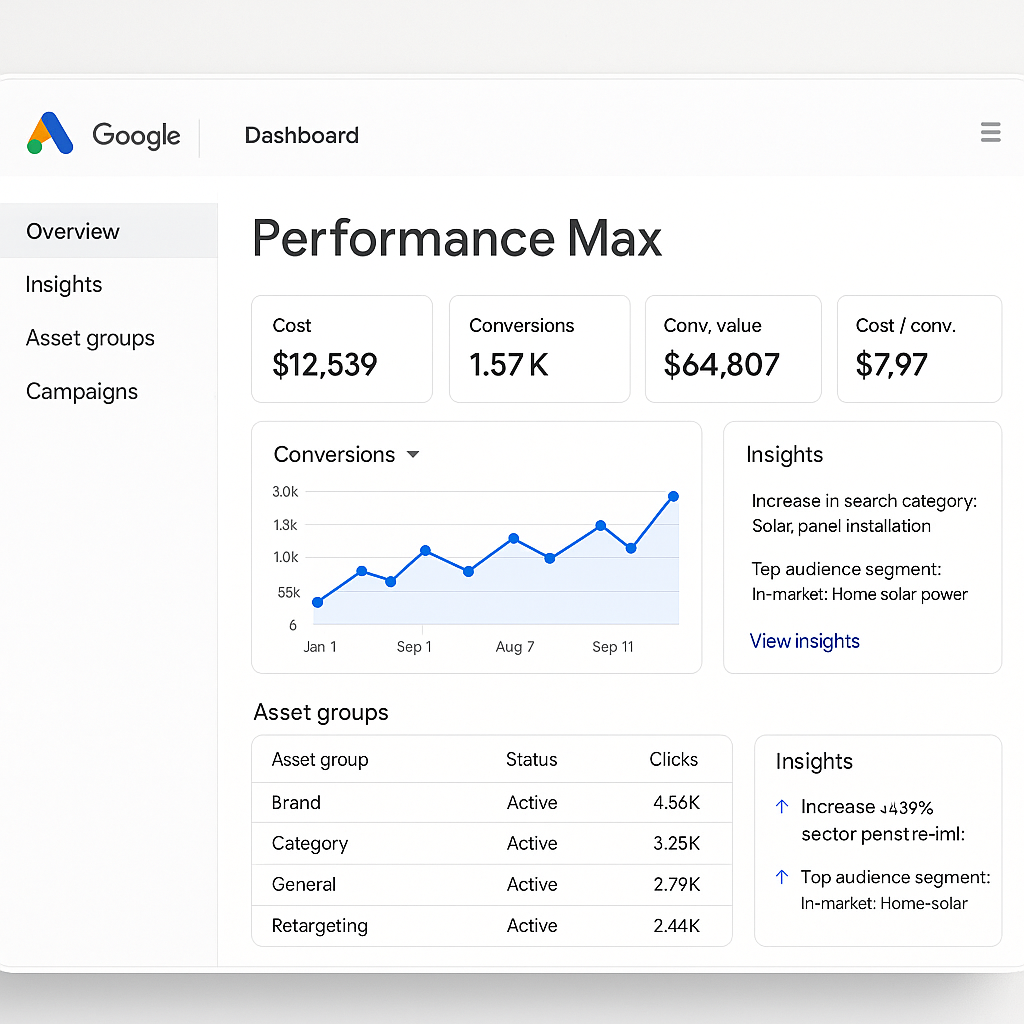
What Is Performance Max?
Performance Max is a Google Ads campaign that uses AI to show your ads across all Google platforms — Search, YouTube, Display, Gmail, Maps, and Discover.
The main idea is simple: instead of running different campaigns for each platform, PMax combines them into one. This saves time and helps Google optimize your budget better.
When Does Performance Max Work Well?
PMax works best when:
- Your tracking is set up correctly.
- Your Search campaigns already have stable data.
- You have good images, videos, and headlines.
- You get a steady number of conversions each month.
You should avoid PMax when:
- Your landing page is weak or slow.
- You have no conversion tracking.
- You rely only on auto-generated assets.
- You want instant results — PMax learns slowly.
The Best PMax Structure for 2025
A simple structure always works better than a complicated one. Keep your setup clean and organized.
Recommended PMax structure:
| Asset Group | Focus | Purpose |
|---|---|---|
| Brand | Your brand name | Protect brand traffic |
| Service/Category | Main keywords | High-intent scaling |
| Cold | Prospecting | |
| Warm | Visitors & leads | Cheap retargeting |
Audience Signals & Data Inputs
Good audience signals include:
- Your customer list
- People searching for your main keywords
- In-market audiences related to your niche
If you run an eCommerce store, make sure:
- Your product feed is clean.
- Titles and images are optimized.
- Pricing is accurate.
Creatives That Help PMax Perform Better
PMax relies heavily on the quality of your creative assets. Better assets = better results.
Your creative checklist:
- High-quality product or service images.
- Short, clear videos (simple phone videos work).
- Multiple headline and description variations.
- A landing page that matches the ad message.
Tracking & Measurement
Without tracking, PMax cannot optimize. You must give Google accurate conversion data.
- Use Enhanced Conversions for better accuracy.
- Link Google Ads with GA4.
- Track important actions like leads or purchases.
- Do not mix brand and non-brand conversions when analyzing results.
Common Mistakes People Make
- Expecting PMax to fix a weak landing page.
- Giving Google poor images or no video.
- Setting too many asset groups.
- Running PMax before fixing tracking.
How AdShot Media Builds High-ROI PMax Campaigns
- Set up accurate tracking.
- Stabilize search campaigns first.
- Build a clean PMax structure (Brand / Category / Warm / Cold).
- Add strong images, videos, and headlines.
- Review insights weekly and scale slowly.
Want us to build your PMax system?
We help businesses get better results using a clean, data-driven Performance Max strategy.
Launch With AdShot →FAQ
Is PMax better than Search campaigns?
PMax is great for scale. Search is great for control. Most accounts need both.
How much budget do I need?
Start with enough budget to get at least 30–50 conversions per month.
Should I run multiple PMax campaigns?
One campaign is usually enough unless you have different goals or product categories.