
Manual vs Automated Bidding in Google Ads
Choosing the wrong bidding strategy can burn your budget fast. This guide explains — in simple terms — when to use Manual CPC, when to trust automation, and how to transition safely in 2026.
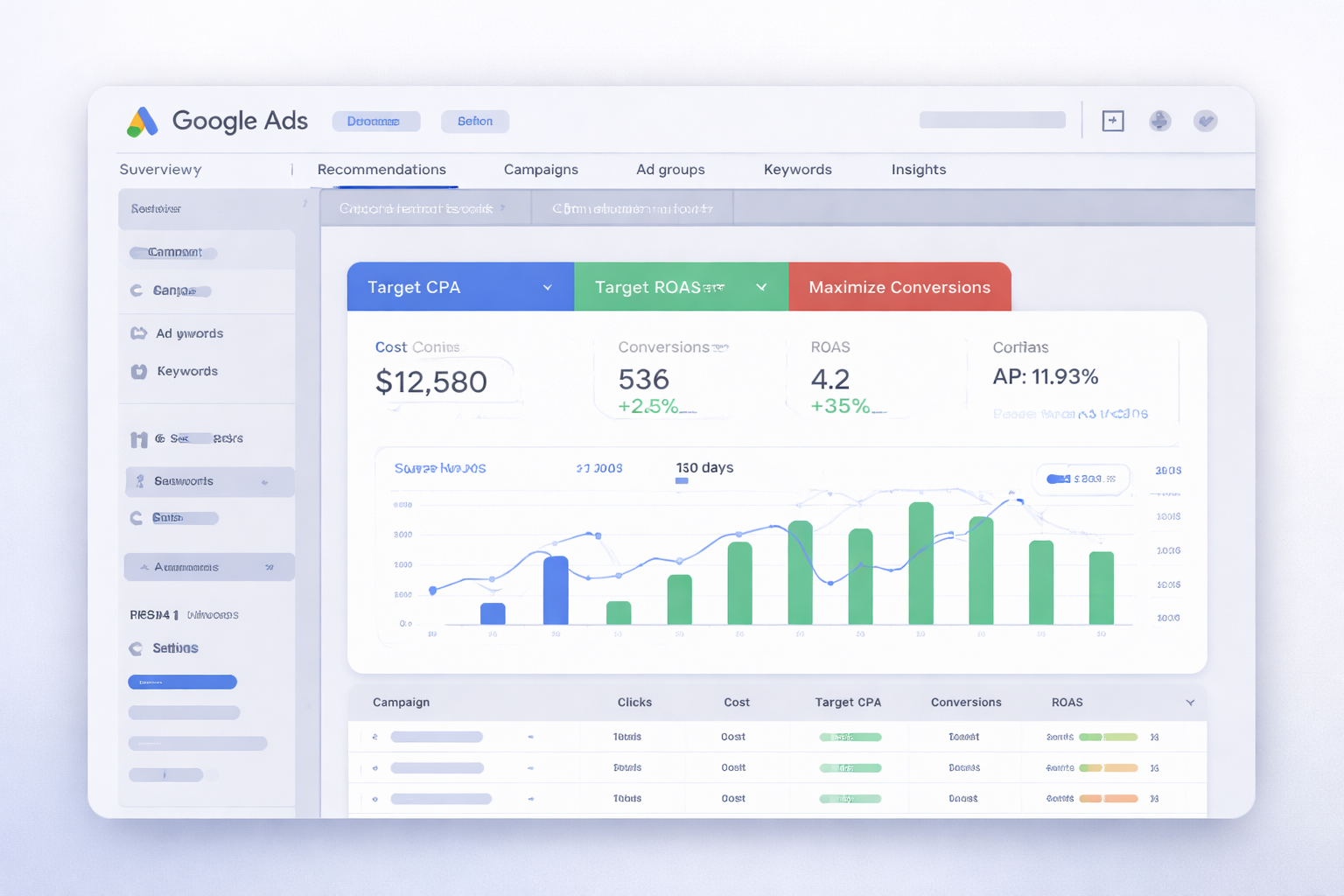
What Does a Bidding Strategy Actually Do?
Your bidding strategy tells Google what you care about most. Clicks? Leads? Revenue? Google will optimise exactly for that — nothing more, nothing less.
Manual CPC: When Control Matters
Manual CPC means you set the maximum cost-per-click yourself. Google does not adjust bids automatically.
- Good for small accounts
- Good for learning real CPCs
- Not scalable long-term
Automated Bidding: Let the Algorithm Work
Automated bidding uses Google’s AI to adjust bids in real time based on user intent, device, location, and behaviour.
| Strategy | Best For |
|---|---|
| Maximize Conversions | Lead generation |
| Target CPA | Cost control |
| Target ROAS | E-commerce & high-ticket |
Manual vs Automated: Quick Comparison
| Manual | Automated | |
|---|---|---|
| Control | High | Low |
| Scale | Limited | High |
| Learning | Human-driven | AI-driven |
So… Which One Should You Use?
Start with Manual CPC if you have little data. Move to automated bidding once you get 30–50 conversions per month.
Common Bidding Mistakes
- Switching strategies too often
- Setting unrealistic Target CPA
- Using automation without tracking
The AdShot Media Bidding Framework
- Start with clean tracking
- Learn baseline with Manual CPC
- Move to Smart Bidding gradually
- Optimise for ROI, not clicks
Want your bidding strategy handled professionally?
We manage Google Ads for travel, solar, e-commerce & high-ticket brands.
FAQ
Is automated bidding always better?
No. Automation works best with good data. Without conversions, it fails.
How long before Smart Bidding works?
Usually 2–3 weeks after enough conversions are recorded.